What Size Utility Trailer Is Best for Homeowners?
Choosing the right utility trailer starts with one simple question: What are you actually going to haul? For homeowners, a trailer can make everything from landscaping projects to home renovations easier, but choosing one that is too small can quickly become frustrating. At the same time, buying more trailers than you need can mean paying for unnecessary capacity, storage, and maintenance.
The right utility trailer size gives you enough room for your typical projects while remaining easy to tow, maneuver, and store. Understanding the most common sizes and how they fit different household tasks can help you make a smarter investment.
Start With How You Plan to Use Your Trailer
Your intended use should be the first consideration when comparing trailer sizes. A homeowner who primarily hauls yard waste has different needs than someone transporting furniture, remodeling materials, or recreational equipment.
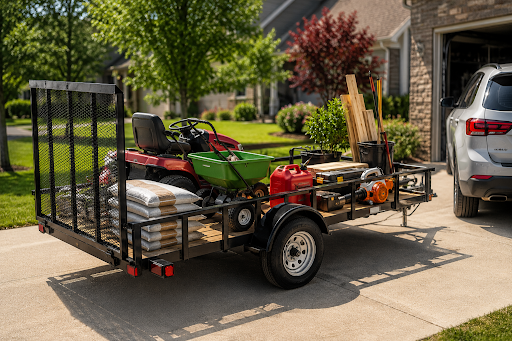
For landscaping, an open utility trailer provides an easy way to move lawn equipment, branches, mulch, soil, and other materials. Home improvement projects may require additional deck length for lumber, drywall, flooring, appliances, or renovation debris. If you plan to transport ATVs, motorcycles, or other recreational equipment, you'll want enough deck space for the equipment while still leaving room for secure tie-downs.
Think about your most common jobs, but don't overlook projects you expect to tackle in the future.
Common Utility Trailer Sizes for Homeowners
Utility trailers come in several lengths and widths, with smaller models generally offering easier maneuverability and lower towing requirements.
A 5x8 utility trailer is a practical choice for basic household tasks. It can handle lawn equipment, branches, small furniture pieces, tools, and general cleanup materials. Its compact footprint also makes it easier to navigate residential streets and store at home.
A 5x10 or 6x10 trailer gives homeowners additional deck space without becoming excessively large. These sizes work well for landscaping equipment, larger furniture, building supplies, and weekend projects. For many homeowners, this range offers a strong balance between capacity and maneuverability.
A 6x12 utility trailer provides considerably more room for larger loads. It's a popular option for homeowners who regularly tackle renovation projects, haul multiple pieces of equipment, or need space for recreational gear. The extra length can also make it easier to distribute cargo properly.
Larger models, such as 7x14 trailers, may be appropriate for homeowners with substantial hauling requirements. However, these trailers require more towing capacity and storage space, so they aren't necessarily the best choice for occasional use.
Consider Your Towing Vehicle
Trailer size should never be selected based on cargo space alone. Your tow vehicle must be capable of safely handling the trailer's loaded weight.
Check your vehicle manufacturer's towing capacity, payload rating, hitch rating, and other specifications before choosing a trailer. Remember that the trailer itself contributes to the total weight. Cargo, passengers, tools, and other equipment also need to be accounted for.
A larger trailer isn't useful if your vehicle can't safely tow it. Matching trailer size to vehicle capacity helps provide better braking, handling, acceleration, and overall control.
Don't Forget Maneuverability
A bigger trailer gives you more room, but it also requires more space to maneuver. Homeowners with narrow driveways, smaller garages, or limited storage areas should consider the trailer's overall dimensions before purchasing.
Smaller utility trailers are generally easier to back into tight spaces and navigate around residential properties. Larger trailers can be more challenging, particularly for someone who doesn't tow regularly.
If you frequently visit hardware stores, landscaping suppliers, job sites, or recreational areas, maneuverability can make a noticeable difference in your experience.
Think About Storage Before You Buy
Storage is another important part of choosing the right utility trailer size. Measure your available parking or storage area and account for the trailer's full length, width, and height.
If the trailer will remain outside, consider how weather exposure may affect the frame, flooring, tires, and other components. If you plan to store it inside a garage or dedicated structure, verify clearance before purchasing.
Don't choose a trailer that fits your project but doesn't fit your property.
Balance Today's Needs With Future Uses
One of the biggest mistakes homeowners make is buying based exclusively on their current needs. A small trailer may be perfect for occasional yard cleanup but become limiting when you start tackling larger home improvement projects.
That doesn't mean you should automatically buy the largest trailer available. Instead, think about the projects you're likely to take on over the next several years.
If you expect to transport larger equipment, purchase building materials, move furniture, or take on significant landscaping work, stepping up one size may provide valuable versatility without going overboard.
Should Homeowners Consider an Enclosed Trailer?
An open utility trailer is often the most practical choice for homeowners because it makes loading bulky materials and equipment straightforward. However, an enclosed trailer may make more sense if you regularly transport valuable tools, weather-sensitive items, or recreational equipment that needs additional protection.
The decision ultimately comes down to how you'll use the trailer, how much protection your cargo requires, and whether you need additional enclosed storage.
Choosing the Right Trailer for Your Needs
The best trailer isn't necessarily the biggest or cheapest option. It's the one that provides enough capacity for your typical loads while remaining compatible with your tow vehicle, storage space, and driving habits.
For homeowners comparing enclosed cargo trailers in Utah, Taurus Trailer offers choices designed for a wide range of hauling needs. Consider your current projects, future plans, towing capacity, and available storage before making your decision.
A properly sized trailer can make household projects faster, easier, and more efficient. Choose carefully now, and you'll have a dependable hauling tool ready whenever the next project comes along.